Fraud Blocker
Summer Sale is on! Up to 25% off trips! ☀️
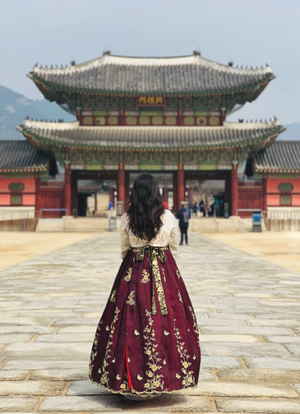
Traveller standing in front of Gyeongbokgung Palace, South Korea

South Korea Travel Guide

A captivating destination in East Asia, South Korea offers a unique travel experience that combines rich history, vibrant culture, and breathtaking landscapes. Explore the bustling streets of Seoul, where ancient palaces and modern skyscrapers coexist. Indulge in Korean street food and trendy shopping in vibrant markets. Immerse yourself in the traditional charm of Bukchon Hanok Village or venture to Jeju Island for stunning natural beauty. South Korea's efficient transportation and warm hospitality make it a culturally immersive and visually captivating travel destination.

One of the highlights of travelling in South Korea is experiencing its fascinating cultural traditions. Enjoy traditional tea ceremonies and explore the world of K-pop in Seoul. Learn to make kimchi or try on traditional hanbok clothing. Hike in Seoraksan National Park or soak in natural hot springs. South Korea's festivals, like the Jinhae Cherry Blossom Festival, add vibrant colours to the year. Whether exploring historical sites, immersing in traditional culture, or enjoying the country's natural beauty, South Korea offers an unforgettable travel experience that blends rich heritage with modern charm.

South Korea Highlights

Modern cityscape at night with skyscraper blocks, traditional ancient walls and forested hills with tower at top

Seoul

If you only visit one place in South Korea, it should be Seoul. Discover K-culture in all its glory inside this electrifying capital, with pop music, shopping, traditional cuisine and neon-lit districts like Myeongdong, Hongdae and Gangnam (yes, that one!) all on offer. Ancient and urban worlds have collided here, and it is simply magical.

Busan

From breathtaking beaches to sensational street food and colourful temples by the sea, Busan makes an epic first impression. Spend your days discovering the rainbow laneways of the famous Gamcheon Culture Village, or riding a cable car from coast to coast. When night falls, it’s time for some karaoke, aka Noraebang!

Unique grey rock formations by cliff edge with emerald flora and sapphire sea with volcano backdrop and blue skies

Jeju Island

A paradise promising emerald craters, cascading waterfalls and unspoilt sandy shores, the ‘Hawaii of Korea’ only begins to capture Jeju Island. This stunning getaway is love at first sight as you uncover iconic hikes like the Olle Trail, get to know island traditions such as Haenyeo (female divers) and sail past the enchanting cliffs.

People dressed in colourful hanbok and waving traditional flags outside palace with crowd watching the ceremony

Gyeongbokgung Palace

Like a phoenix soaring from the ashes, Gyeongbokgung Palace has been rebuilt several times since its first construction in 1392 under the Joseon Dynasty. Today, it is more vibrant than ever, and travellers are even welcome to take part by dressing in Hanbok (ceremonial robes). The Changing of the Guard is a spectacle you do not want to miss!

Green hills with small barbed wire fence with animal cut-outs and the words 'DMZ'

Demilitarized Zone

Split across the contrasting nations of North and South Korea, the Demilitarised Zone (DMZ) is a one-of-a-kind experience, offering special insight into the war that shaped the country’s history. From exploring secret tunnels to catching a glimpse of North Korea from the observatory deck, these are travel memories that you will never forget.

Illuminated traditional bridge with bright red columns and emerald details with pagoda rooftops under violet sky and waters

Gyeongju

Like a K-drama come to life, Gyeongju is where travellers can immerse themselves in the rich ancient past of the Silla Kingdom. Explore this living museum on our South Korea trips, home to more temples, tombs and ruins than anywhere else in the country. Soak in its historic atmosphere as you cycle around and take in views of Anapji Pond.

Traditional Hanok village with secluded palace grounds and two women dressed in pastel hanbok surrounded by green trees

Jeonju

Get a taste of Jeonju, South Korea’s World Heritage City of Gastronomy, and you will be rewarded with the most mouthwatering flavours imaginable, including national staples like bibimbap and craft beer. After relishing one of the tastiest meals of your life, step back in time as you stroll around charming Hanok villages.

Smooth rocks atop of a mountain with stairs leading up, surrounded by green mountains at dawn

Seoraksan National Park

Easily one of South Korea’s most beautiful national parks, Seoraksan transforms with the seasons. No two trips are quite the same here, whether you are hiking under the rosy haze of cherry blossom trees or blazing red autumn foliage. One of the park’s biggest draws has to be its jagged rocky peaks, stretching out like hands to the sky.

Key Facts

Capital City

Seoul

Currency

South Korean Won (KRW)

Language

Korean

Dialling Code

+82

Plug Type

C and F

  • South Korea is a high-tech, industrialised country offering all the comforts of modern life alongside traditional Asian culture
  • South Korea has amazing opportunities to earn money as a paid English teacher and enjoy the Asian lifestyle
  • Lively cities lie alongside beautiful countryside, stunning mountains and idyllic islands
  • This compact country can be explored with ease and provides all the mod-cons you could ask for
  • You can easily hop across to other Asian countries for a whole gap year of fun!

Staple foods in South Korea are similar to other Asian countries and include rice, vegetables, meat (such as beef chicken & pork), seafood and noodles. Soups or broths are also popular South Korean dishes. Ingredients in Korean cookery include chilli, garlic, soy sauce, ginger, soybeans and sesame oil.

A popular method of cooking, often served in restaurants, is to grill meat or seafood on a central griddle set in the middle of a table, then wrap it in lettuce leaves and serve it with a range of side dishes. Side dishes are known as ‘Banchan’ and South Korea’s most famous side dish by far is ‘Kimchi’ – a fermented vegetable dish usually made with cabbage, Korean radish or cucumber marinated in ginger, garlic, spring onions and chilli.  Koreans eat Kimchi by the bucketload but it can be an acquired taste for Western palettes!

The Korean people enjoy drinking beer and you can also sample the strong local drink Soju, which really packs a punch!

The climate in Korea has four distinct seasons:

Spring is from March to May, and temperatures are mild, with occasional wet weather. This is the best time to visit if you want to see the cherry blossoms and other fabulous flora in bloom.

Summer runs from June to August, and the Monsoon season brings heavy rainfall from late June to mid-July. In August the temperatures can soar to high, sticky heat and humidity.

Autumn is during the months of September to November, and this is a wonderful time to visit South Korea, with sun, warmth and clear skies.

Winter is from December to mid-March, with winters in the north being colder than the south. The weather can become very cold and temperatures can fall below zero, but it’s the ideal time for skiing or snowboarding!

Visa Assistance

Visas may be required depending on your nationality, travel plans, and length of stay. Below are the FCDO travel advice for British travellers. Entry rules can change at any time, so always check with the relevant embassy before travelling.

To make things easier, we’ve partnered with The Travel Visa Company, a UK-based visa specialist. Their team can guide you on requirements and, for a fee, apply for visas on your behalf.


Entry Requirements for UK Travellers

This information is for people travelling on a full ‘British citizen’ passport from the UK. It is based on the UK government’s understanding of South Korea’s current rules for the most common types of travel.

The authorities in South Korea set and enforce entry rules. If you’re not sure how these requirements apply to you, contact the South Korean Embassy in the UK.

Passport validity requirements

To enter South Korea as a tourist for up to 90 days, your passport must have an ‘expiry date’ after the date you are leaving South Korea.

To enter South Korea on a long-term visa, your passport should have an ‘expiry date’ at least 6 months after the date you arrive.

Check with your travel provider that your passport and other travel documents meet requirements. Renew your passport if you need to.

You will be denied entry if you do not have a valid travel document or try to use a passport that has been reported lost or stolen.

Dual nationals

When returning to the UK, British citizens must carry a valid British passport or certificate of entitlement. See Dual citizenship.

Visa requirements

You can enter South Korea for up to 90 days for short-term business or tourism. You must have an onward or return ticket. It’s illegal to be employed in South Korea while visiting visa-free, whether as a teacher or in any other capacity.

South Korea operates an electronic travel authorisation system called K-ETA. Anyone eligible for visa-free entry to South Korea is usually required to get K-ETA approval before departure. However, British nationals travelling visa-free to South Korea are temporarily exempt from requiring a K-ETA until December 31, 2026. Further information about the K-ETA exemption can be found on the K-ETA notice board.

If you need to apply for a K-ETA, you should ensure that you apply through the Korean government’s official K-ETA website. Other sites offering K-ETA application services are generally scams. It can take up to 72 hours for K-ETA approval to be granted.

If you are travelling for any purpose other than short-term business or tourism, check visa requirements with the South Korean Embassy in the UK.

For those in South Korea on a work visa, all employment changes must be authorised by Korean Immigration.

Re-entry permits for long-term visa holders

Most foreign nationals in South Korea on long-term visas are allowed to re-enter South Korea within one year of departure without the need for a re-entry permit. Check with the Korea Immigration Service.

If you are resident and intend to spend more than a year outside of South Korea, in most cases, you must apply for a multiple re-entry permit via the Hi Korea website before departure. If you require a re-entry permit, engage early with the immigration authorities and apply for a re-entry permit at least 4 working days ahead of any planned travel. 

Visas for working as an English teacher

To get a visa to teach English in South Korea, you must have a 3-year university degree. A Teaching English as a Foreign Language (TEFL) qualification alone is not enough. If you are found to have a teaching visa by deception, you will be detained and deported.

British nationals teaching English in South Korea have sometimes found living and working conditions to be below their expectation or have had difficulties getting the correct visas and residence permits. Some also report more serious problems such as breach of contract, confiscation of passport, payment being withheld and inadequate insurance.

Check all terms and conditions of your employment carefully. If possible, speak to other teachers from the place where you plan to work before accepting any offer. If you are in South Korea and in need of assistance, you should contact the British Embassy in Seoul.

Entry declaration form

Foreign nationals entering South Korea are required to submit an entry declaration form (arrivals card) to the immigration officer upon arrival. From 24 February 2025, passengers may submit an e-Arrival card online in advance instead of submitting a paper form to the immigration officers.

You can submit the e-Arrival card within 72 hours (3 days) before your arrival in Korea. There is no fee to submit the e-Arrival card. Travellers should visit the e-Arrival card website for further details on the e-Arrival card submission process. Paper entry declaration forms will still be available.

Health screening

All travellers arriving in South Korea from ‘Strict Quarantine Inspection Required Areas’ (including those who have transited in a ‘Strict Quarantine Inspection Required Area’) need to submit a health questionnaire, either through the pre-entry Q-Code system or by completing a paper-based questionnaire on arrival in South Korea. Travellers arriving in South Korea from ‘Quarantine Inspection Required Areas’ who exhibit symptoms must also submit a Q-Code or paper-based health questionnaire.

As of 1 August 2025, the UK is designated as a ‘Quarantine Inspection Required Area’, meaning that if you have any symptoms of illness you must submit a Q-Code or paper-based health questionnaire on arrival.

Travellers should check the full list of Quarantine Inspection Required Areas prior to travel, as the countries on the lists change frequently. If you need to submit a questionnaire, you should also review the Q-Code submission process. Failure to complete required health screenings could result in a fine of up to KRW 10 million.

Vaccine requirements

For details about medical entry requirements and recommended vaccinations, see TravelHealthPro’s South Korea guide.

Customs rules

There are strict rules about goods you can take into or out of South Korea. You must declare anything that may be prohibited or subject to tax or duty.

In South Korea, the concept of ‘Kibun’ is very important – ‘Kibun’ is about price, dignity and keeping face and is of great significance in Korean culture. The family is also central to Korean life.

A traditional mode of greeting is to bow, with those of lower status bowing to those of higher status. A handshake often follows.

If you visit a Korean home, you should bring a gift, such as chocolate or flowers. Gifts in multiples of 4 are considered unlucky, but multiples of 7 are lucky. It is usual to arrive up to 30 minutes late, and you should remove your shoes when entering a Korean home.

When using chopsticks there are several do’s and don’ts – never point your chopsticks, do not pierce food with them, and after every few bites, you should return your chopsticks to the table. Chopsticks should not be crossed or placed across your rice bowl. It is polite to clear your plate, and when you have finished, you should place your chopsticks together on the rest or on the table.

Health

You should visit your GP about 8 weeks before travel to get advice about any necessary vaccinations or health precautions. There have been some reported incidents of tickborne disease in 2013 in grassy areas – wearing long-sleeved tops and trousers in grassy areas is advised.

Safety

The crime rate in South Korea is low, although petty theft and pickpocketing can occur, especially in major towns and cities. Take care when travelling alone at night and only use legitimate taxis or public transport.

Since the end of the Korean War in 1953, the Korean peninsula has been divided by a de-militarised zone (DMZ) separating North and South Korea. Although a peace agreement is in place, tensions can rise at short notice.

Drug possession or use is illegal in South Korea and penalties are severe.

You should carry a form of identification with you at all times and make sure your next-of-kin details have been entered into the back of your passport.

We do not recommend hiring motorbikes, scooters, ATV vehicles, quad bikes or other types of motorised vehicles whilst abroad. Safety and quality of vehicles vary considerably and the traffic conditions can be much more dangerous than what UK travellers are used to. Should you wish to go against this advice, you should ensure you are hiring from a reputable company and that your travel insurance covers you for such activities.

Related Articles

Cherry Blossoms in South Korea [2026]: When & Where to See

Last updated: 30th Jan 2026

Cherry blossoms are one of the most iconic features of South Korea and Japan and are a total must-see. It transforms the traditional settings into a dreamlike painting. Korean cherry blossoms are symbolic in their culture, meaning time of renewal...

Japan Intro: Q&A with Maisie

Last updated: 31st Dec 2025

Dreaming of Japan? Maisie, our Product Assistant, knows the feeling. Japan has been at the top of her bucket list for as long as she can remember… So when the opportunity came up to join our 13-day Japan Intro...

The 12 Best Solo Travel Destinations for Women

Last updated: 16th Dec 2025

More women than ever are choosing solo travel. Whether it’s joining a group tour or going at it alone with a customised itinerary - if you’re longing to explore the world, why wait? Booking my first...

Where the Gap 360 Team Travelled In 2025

Last updated: 11th Dec 2025

Has the travel bug bitten you hard? We know the feeling. Whether you’re already booked and busy for the year ahead or have no clue where 2026 may take you, it’s fun to imagine all the possibilities...

Why South Korea Is My New Favourite Destination

Last updated: 13th Oct 2025

Help, I cannot stop daydreaming about South Korea. Now that I have eaten every iconic dish, well and truly explored the streets of Seoul, and shopped beyond my means on K-pop and K-beauty products (you know how everyone jokes about...

Best Places To Visit in Japan for First-Time Travellers

Last updated: 12th Sep 2025

Dreaming of sushi, cherry blossoms and neon arcades? Then, you’re in for an unforgettable adventure 🗾🍣⛩️ From buzzing cities to peaceful shrines, Japan is packed with bucket list moments, especially for first-timers. It really offers everything a traveller could...

11 Unmissable Thailand Temples

Last updated: 6th May 2025

In partnership with There is no feeling quite like seeing your first Thailand temple. From the bright and colourful pagodas to the stunning Buddha statues and a rich sense of living history, these are the moments that take your breath...