Fraud Blocker
Summer Sale is on! Up to 25% off trips! ☀️
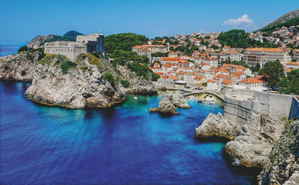
Dubrovnik shoreline, croatia

Croatia Travel Guide

Croatia is a country bursting with colour and charm, with its crystal blue waters, stunning Adriatic Coast and idyllic scattering of islands. Chill out in the capital Zagreb, stop off for history in Split, then sail across the amazing Adriatic Sea through gorgeous, unspoilt islands such as Pag, Korcula, Vis and Hvar.  Discover the delights of beautiful Dubrovnik and explore its walled city streets, visit spectacular scenery in National Parks and lap up the Mediterranean lifestyle in incredible Croatia!

Croatia Highlights

Aerial shot of Dubrovnik's Medieval city walls and rugged cliffs with Croatian style architecture inside

Dubrovnik

No phrase captures Dubrovnik better than “Paradise on Earth.” Step inside those ancient stone walls and peel back centuries of history. Uncover magic around every corner as you wander the historic laneways, get starstruck by the filming locations of Game of Thrones, or kayak in the crystal-clear waters beyond the city borders.

Modern sailboat gliding along deep turquoise waters surrounded by lush green hills and traditional Croatian port town

Croatia Island-Hopping

Wondering what a day in the life looks like on our Croatia trips? Enjoy lazy mornings gliding across the ocean, lounging on the sundeck, curling up with a good book and indulging in food spreads that taste like heaven on a plate. When evening rolls around, raise a glass with your new travel crew. It’s more than a dream come true.

Cruise sailboats docked at harbour in Hvar at nighttime backed by hills and illuminated buildings

Hvar

If you think that Hvar throws a good party, think bigger. Get ready for one of the most exhilarating evenings of your life at Croatia’s most iconic beach clubs and underground lounges. Dance to the DJ sets, catch the famous fire shows and sip cocktails over the ocean views. Your perfect night out in Hvar is just waiting to be found.

Lush viewpoint of emerald hills and Croatian city with modern and traditional architecture, port and blue ocean

Split

From the moment you land in Split on our Croatia tours, you won’t be able to get this city out of your head. Backed by mountains and opening onto the Adriatic Sea, its natural beauty speaks for itself. What takes Split into legendary status is Diocletian's Palace: stunning Roman ruins in the bustling heart of the city.

Waterfall viewpoint of cascading rivers surrounded by grey rocks and emerald forest

Plitvice Lakes

Unveil Croatia’s enchanting fairytale setting at the Plitvice Lakes, where cascading waterfalls lead to hidden caves, forested hills and bright emerald pools of water. Wooden footbridges connect all 16 of the national park’s famous lakes, inviting you closer into the wilderness that transforms with every season.

Scenic viewpoint of Korcula Old Town with island in distance, blue sea and dark green forest

Korcula

Craving the easy island life? Korcula invites you to slow down and soak in those irresistible ocean views. Stretch out on secluded beaches, or cave into your curiosity with pine-scented trails that wind along the coast. After sunset, an evening of dinner, drinks and laughter at the Old Town’s candle-lit rooftop terraces ends the day in style.

Key Facts

Capital City

Zagreb

Currency

Euro (EUR)

Language

Croatian

Dialling Code

+385

Plug Type

C and F

  • Visit an unspoilt and exciting corner of Europe that was for many years closed off from the tourist trail
  • Go sun-seeking in the Croatian summer months and take a dip in the warm, turquoise seas
  • An incredible location for sailing, especially around the idyllic islands along the Adriatic Coast
  • Learn about recent history as you discover the legacy of the Yugoslav War in the 1990s and how Croatia has rebuilt itself like a phoenix from the ashes
  • A great stop-off on a European tour – head into neighbouring countries such as Serbia, Hungary, Bosnia and Herzegovina and Slovenia or hop across to Italy

The culinary influences in Croatia are varied, with influences of both the Mediterranean food of countries such as Italy and the heavier food of Eastern Europe. If you visit the Adriatic Coast you are likely to find a wide variety of seafood dishes, as well as Italian-style pizzas. You should try some tasty local cured ham, served alongside a hard parmesan-style cheese called Paški sir, from Pag Island. Pork, lamb and veal are popular meats, and you can stock up on carbs with potatoes, gnocchi and pasta all making regular appearances on Croatian menus. Soup and goulash also feature, as a nod to Eastern European cuisine. Try a štrukli, a cheese and pastry delicacy which makes a tasty snack.

The best time to visit Croatia is between April and September. May, June and September are great months to visit if you want warm weather without the crowds. The Adriatic Coast has a Mediterranean climate, with cold winters and hot summers, with the average summer temperature being 26 to 30°C.

Visa Assistance

Visas may be required depending on your nationality, travel plans, and length of stay. Below are the FCDO travel advice for British travellers. Entry rules can change at any time, so always check with the relevant embassy before travelling.

To make things easier, we’ve partnered with The Travel Visa Company, a UK-based visa specialist. Their team can guide you on requirements and, for a fee, apply for visas on your behalf.


Entry Requirements for UK Travellers

This information is for people travelling on a full ‘British citizen’ passport from the UK. It is based on the UK government’s understanding of the current rules for the most common types of travel. 

The authorities in Croatia set and enforce entry rules. If you’re not sure how these requirements apply to you, contact the Croatian Embassy in the UK. 

Passport validity requirements 

Croatia follows Schengen area rules. Your passport must:

  • have a ‘date of issue’ less than 10 years before the date you arrive – if you renewed your passport before 1 October 2018, it might have a date of issue that is more than 10 years ago, making it invalid for entry to the Schengen area
  • have an ‘expiry date’ at least 3 months after the day you plan to leave the Schengen area (the expiry date does not need to be within 10 years of the date of issue)

Check with your travel provider that your passport and other travel documents meet requirements. Renew your passport if you need to. 

You will be denied entry if you do not have a valid travel document or try to use a passport that has been lost or stolen. 

Dual nationals

When returning to the UK, British citizens must carry a valid British passport or certificate of entitlement. See Dual citizenship.

Visa requirements 

You can travel without a visa to the Schengen area, which includes Croatia, for up to 90 days in any 180-day period. This applies if you travel:

  • as a tourist
  • to visit family or friends
  • to attend business meetings, cultural or sports events
  • for short-term studies or training

The requirements for working in Croatia are different.

If you’re travelling to other Schengen countries make sure your whole visit is within the 90-day visa-free limit. Visits to Schengen countries in the 180 days before you travel count towards your 90 days. If you overstay the 90-day visa-free limit, you may be banned from entering Schengen countries for up to 3 years.

At Croatian border control, you may also need to: 

  • show proof of your accommodation, for example, a hotel booking confirmation or proof of address for a second home
  • show proof of your travel insurance
  • show a return or onward ticket
  • prove that you have enough money for your stay – the amount varies depending on your accommodation
Staying longer than 90 days in a 180-day period 

To stay longer, you must meet the Croatian government’s entry requirements. Check which type of visa or work permit you need with the Croatian Embassy in the UK. See the Croatian Ministry of the Interior’s guidance on work permits.

If you’re in Croatia with a residence permit or long-stay visa, this does not count towards your 90-day visa-free limit. 

Read about entry processes if you live in Croatia.

New Schengen entry requirements 

The European Union’s (EU) new Entry/Exit System (EES) is now being implemented across the Schengen area. 

This means that when you travel into the Schengen area for short stays, you may need to register your biometric details, such as fingerprints and a photo. There is no cost for EES registration. 

On your first visit into a Schengen country, you may be asked to register your details at a special booth before proceeding to the immigration desk. Follow directions from your travel operator or the staff at your port of entry. You may also need to provide either your fingerprint or photo when you leave the Schengen area. Children aged 11 or younger will not have their fingerprints scanned but can be required to have their photo taken. 

You do not need to take any action before you arrive at the border on entry to the Schengen area, but EES may take each passenger extra time to complete so be prepared to wait longer than usual at the border and to allow more time for immigration controls when you depart the Schengen area.

EES is replacing the previous system of manually stamping passports when visitors arrive in the Schengen area for short stays. You may be asked to input biometric details every time you enter or exit.

If you enter the Schengen area through the Port of Dover, Eurotunnel at Folkestone or Eurostar at St Pancras International, any information will be taken at the border before you leave the UK. 

Your digital EES record is valid for 3 years.

Read more information on the EU Entry/Exit System and to understand which countries are in the Schengen area.

If you are long-term resident in a Schengen country, you are exempt from EES in all Schengen countries. The full list of EES exemptions is on the EU’s official Travel Europe website.

Croatia-Slovenia border crossings 

There are checks at Slovenia’s borders with Croatia. If you are travelling from Croatia to Slovenia, check travel advice for Slovenia. 

Vaccine requirements 

For details about medical entry requirements and recommended vaccinations, see TravelHealthPro’s Croatia guide.

Registering with the police 

Your accommodation provider must register your arrival in Croatia with the police within 48 hours. Your hotel will normally register you. If your accommodation provider is unable to do this for you, fill in and print form obrazac 16a (PDF). You must hand in the completed form at a police station. Alternatively, you should go to the nearest police station with the owner of the accommodation to register your address in Croatia. 

Customs rules 

There are strict rules about goods that can be brought into and taken out of Croatia. You must declare anything that may be prohibited or subject to tax or duty. 

Taking food into Croatia 

You cannot take meat, milk or products containing them into EU countries. There are some exceptions such as powdered baby milk, baby food and special foods or pet feed required for medical reasons.

Taking money into Croatia

Declare cash or travellers cheques if the value is 10,000 euros or more. You will get a certified declaration to show you brought it in with you. If you do not, your money could be seized when you leave.

Croatia is predominantly a Catholic country, and you should dress modestly if you are visiting Catholic sites or churches. You should also be sensitive to Croatia’s troubled history and avoid discussing the Yugoslav War.

Health

You should visit your GP at least 8 weeks before travel for health advice.

Safety

The crime levels in Croatia are low and violent crime is rare, although you should take the usual precautions, especially in larger cities, where pickpockets operate.

You should carry your passport with you at all times in Croatia.

Some remote regions of Croatia still have some unexploded mines, a legacy of the Yugoslav Wars. Seek advice if heading far off the tourist trail.

We do not recommend hiring motorbikes, scooters, ATV vehicles, quad bikes or other types of motorised vehicles whilst abroad. Safety and quality of vehicles vary considerably and the traffic conditions can be much more dangerous than what UK travellers are used to. Should you wish to go against this advice, you should ensure you are hiring from a reputable company and that your travel insurance covers you for such activities.

Related Articles

10 Reasons to Go Skiing & Snowboarding in Austria

Last updated: 10th Feb 2026

I’ve just come back from the little town of Hopfgarten in the Kitzbühel Alps, and had the best time learning to snowboard. Believe me, if you’ve ever thought about learning for yourself, then this...

Maximise Your Annual Leave With UK Bank Holidays [2026]

Last updated: 16th Oct 2025

The perk of working Monday to Friday is Bank Holidays, aka, more time for travel! ✈️ Because let’s face it - once you’ve started travelling, you’ll never want to stop! So if you want your...

The 13 Best Party Destinations in Europe

Last updated: 1st Oct 2025

Europe has some legendary nightlife! We’re talking partying in thermal baths, raving in a medieval fortress and living it up on the sands of stunning islands. There’s no better place to party than the best party...

What the New EES Means for Your European Adventures

Last updated: 11th Sep 2025

Article in collaboration with the Foreign, Commonwealth & Development Office (FCDO). Whether you’re hearing about EES for the very first time or you’ve already come across it, the system officially launches on 12th October 2025. Here...

The Top 10 Travel Destinations for September 2026

Last updated: 4th Sep 2025

Dreaming of a September getaway? As the summer months fade for much of the Northern Hemisphere and students head back to school, it’s the time of new beginnings. As destinations transition in or out of their peak times...

11 Cheap Countries to Visit in Europe

Last updated: 27th May 2025

Europe is full of fantastic times, gorgeous weather, and some of the best food you’ll ever taste, and it is also bursting with a rich diverse culture and natural beauty. It goes without saying that everyone needs and...

Greek Island Hopping: 9-Day Cyclades Itinerary

Last updated: 17th Apr 2025

When you picture island-hopping in Greece, you probably think of vibrant beach bars, bright blue waters, and sunsets that paint the sky… totally gorgeous, right?! Well, that’s the iconic Cyclades islands for you, and you’re...

The Ultimate Guide to Island-Hopping Croatia's Best Islands

Last updated: 15th Apr 2025

Picture turquoise waters, charming old towns, and sun-kissed beaches. Island hopping in Croatia is a dream come true, with incredible locations scattered in the Adriatic Sea. Whether you’re searching for secluded swim spots, vibrant nightlife, or historic sites...

The 13 Best Summer Destinations in Europe

Last updated: 10th Apr 2025

Want a summer you’ll look back on and say “I did that!”? Then, look no further. Your euro-summer could look like this: Marvel at La Sagrada Familia in Barcelona, watch fiery Greek sunsets or indulge in...